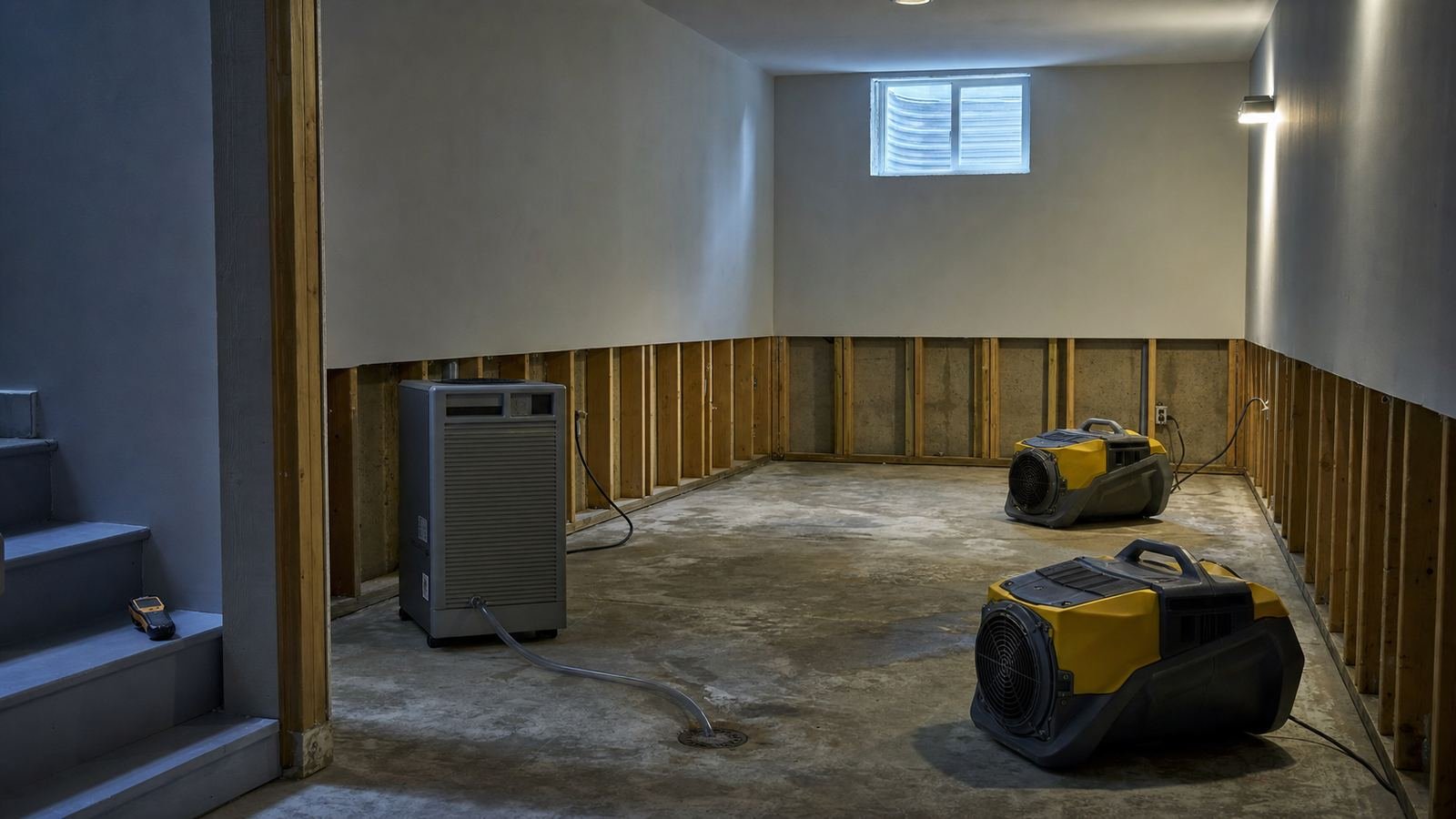
What water damage restoration actually includes
Water damage restoration is more than vacuuming up visible water. It is a sequence: make the site safe, stop the source, identify where water traveled, remove liquid water, decide what can be cleaned or removed, dry the structure under controlled conditions, and verify that affected materials have reached an appropriate dry goal. The IICRC S500 standard overview describes water-restoration work as including inspection, building and material science, drying technology, safety, documentation, and restoration of structures, systems, and contents.
The word restoration does not promise that every material will be saved. A wet supply-line leak caught early may allow carpet, wall finishes, and contents to be dried in place. Water that entered from a backed-up waste line, river, or surface flooding has a different contamination profile. In those situations, the decision is driven by health and cleanability, not just whether an item still looks usable. The EPA’s flood-cleanup guidance advises sorting materials and discarding items that cannot be cleaned and dried.
Do not enter standing water to reach a breaker panel, appliance, or shutoff. If wet electrical equipment, a sagging ceiling, gas odor, or building movement is present, stay out of the affected area and seek the appropriate emergency or qualified help.
The first 24 hours: a practical sequence
Start with the question, “Is the water still moving?” A burst pipe, appliance supply line, failed water heater, rain intrusion, or sewer backup each needs source control before any drying effort can succeed. Turn off a fixture valve or the main water supply only if it is safe and you know the location. If the water is coming from outdoors, focus on safe entry, moving people and valuables out of harm’s way, and following local emergency instructions.
Document before the scene changes. Take wide and close photographs of rooms, visible water lines, damaged contents, the suspected source, and serial labels where useful. Keep a simple room-by-room inventory and retain cleanup receipts; that record can help explain what existed before removal. Wear appropriate protective clothing and use caution around damaged structures and power lines.
Then move from the least risky work to the more technical work:
- Keep people, pets, and unnecessary foot traffic away from water and wet materials.
- If safe, stop the water and protect dry areas from migration.
- Photograph and make a simple room-by-room inventory.
- Remove standing water from clean, accessible hard surfaces only when electrical conditions are safe.
- Separate dry belongings from wet belongings; do not stack damp items together.
- Identify materials that have wicked water behind finishes or beneath flooring.
- Establish a drying plan and check it with measurements rather than appearance alone.
The CDC says flooded or sewage-contaminated drywall and insulation should be removed and discarded, and that homes should be cleaned and dried promptly after a flood when possible. CDC cleanup guidance also notes that floodwater may contain bacteria from sewage, agricultural, or industrial waste.
The mitigation process, step by step
1. Assessment and safety survey
An assessment records the source, approximate start time, affected rooms, materials, visible water line, odors, electrical concerns, and the likely path of migration. A water event in an upstairs laundry can affect subflooring, ceiling cavities, insulation, and contents below it even if the lower floor has little standing water. The IICRC position statement says the initial response should verify the source, identify the extent of migration, document pre-existing damage and secondary-damage concerns, and establish dry standards and drying goals. IICRC’s position statement is a useful explanation of why inspection precedes a final scope.
2. Extraction and controlled removal
Extraction means removing liquid water from floors, carpet, pads, cavities, and other reachable areas. It reduces the amount that must evaporate later. Controlled demolition is selective removal of materials that cannot be safely cleaned or dried, or that block access to wet structure. It may mean lifting carpet pad, opening a wall at the wettest point, or removing contaminated porous finishes. It is not automatic wholesale tear-out.
3. Drying, dehumidification, and air movement
Drying works by moving moisture from wet materials into the air and then removing that moisture from the air. Air movement, dehumidification, temperature, and material type all matter. Open windows can help in some conditions; in warm, humid weather they can also slow drying. EPA notes that drying can take days to weeks and that a home should not be sealed or refinished until materials are confirmed dry inside. EPA’s drying guidance specifically describes using moisture meters to check walls, cabinets, and flooring.
4. Monitoring and verification
A dry-looking wall is not necessarily dry inside. Monitoring compares moisture readings in affected materials with an appropriate dry reference or target, tracks temperature and humidity, and confirms that hidden areas have not been overlooked. The structural drying page explains the measurement and verification side in more detail. Reconstruction should wait until the materials that will be covered are actually dry. EPA cautions against sealing flooded areas or refinishing materials before they are confirmed dry inside. EPA’s drying guidance explains that check.
Water categories and drying classes
A category describes contamination. A class describes the amount of water absorbed and the drying challenge. They are separate decisions.
| Classification | Meaning | Typical planning effect |
|---|---|---|
| Category 1 | Water began from a sanitary source, such as a supply line, with no substantial contamination at the point of release. | Prompt extraction and drying may preserve more materials, subject to what the water contacted. |
| Category 2 | Water has significant contamination and could cause discomfort or illness if contacted or consumed. | Add contamination controls and make more conservative decisions about porous materials. |
| Category 3 | Grossly contaminated water, including sewage backflow and rising river or stream water. | Containment, protective measures, removal of affected porous materials, cleaning, and drying are typically needed. |
| Class 1–4 | A scale of moisture load and drying difficulty, from limited absorption to deeply held water in low-permeance materials. | Helps determine drying strategy, access, equipment, and monitoring needs. |
The current IICRC water-category statement identifies sewage, waste-line backflow beyond a trap, and rising river or stream water as examples of Category 3 water. It also says category depends on the source, the water quality after it contacts materials, and potential contamination. That is why a clear pipe leak can become a more complex loss if it stays wet, travels through dirty assemblies, or supports microbial growth.
Carver and Carver County context
Carver’s setting makes it useful to separate indoor plumbing losses from outdoor and surface-water events. The City identifies the Minnesota River, Spring Creek, and Carver Creek as local waterways, with flooding typically occurring in spring and summer from snowmelt, rainfall, or localized heavy rain. City of Carver flood-hazard information also notes that smaller floods can still create significant hazards near channels. This local waterway context is a reason to separate surface-water events from ordinary indoor plumbing losses.
For a suspected river, creek, or surface-water event, treat the water as potentially contaminated and do not make a clean-water assumption. If floodwater reached a private well, do not use the well water for drinking, cooking, or brushing teeth until it has been properly addressed and testing establishes that it is safe.
Insurance: document first, then review the policy
The mitigation process and the coverage decision are related but separate. Photographing before removal, keeping damaged components until your insurer advises otherwise when practical, and retaining invoices and receipts help preserve the record. Keep a room-by-room record that explains the source, affected materials, and actions taken.
Avoid assuming that all water is covered the same way. Minnesota Commerce says a typical homeowners policy and flood insurance do not cover sewer backups or inability of a sump pump to handle runoff; a separate product or endorsement is needed for those risks. Minnesota Department of Commerce recommends documenting damage and reviewing the policy. For a deeper coverage discussion, see Minnesota water-damage insurance claims rather than treating this page as policy advice.
When a small DIY response may be enough—and when it is not
| Situation | A limited DIY response may be reasonable | Move to a documented mitigation approach |
|---|---|---|
| Source | A small, known clean spill that is fully stopped. | Unknown source, ongoing leak, sewer backup, surface water, or floodwater. |
| Materials | A hard, nonporous surface with no seepage under finishes. | Carpet pad, drywall, insulation, wood flooring, cabinets, ceilings, or cavities are wet. |
| Safety | Electricity is unaffected and the area is stable. | Wet electrical equipment, a sagging ceiling, gas odor, or structural concern is present. |
| Time and extent | You can fully dry and inspect the small area quickly. | Water migrated beyond view, sat for an unknown period, or a musty odor develops. |
| Health | No sewage, floodwater, or vulnerable occupant exposure concern. | Contamination is possible or occupants have respiratory or immune concerns. |
If the event is limited, see what to do first after water damage for a concise action checklist. If the water is still present, start with emergency water removal. If a basement is involved, the practical decisions differ enough to warrant the flooded basement cleanup page.
What to do next
If water is actively entering the property, read emergency water removal next. For a basement event, continue to flooded basement cleanup; for drying measurements and readiness to rebuild, see structural drying.
Questions people ask
What is the first priority after water enters a home?
Make the area safe and stop the water source if you can do so without entering standing water or handling wet electrical equipment. Photograph the affected area before removing items when it is safe.
Can a wet basement be dried with fans alone?
Sometimes a small, clean spill on a hard surface can be dried that way. Water that reached carpet, walls, insulation, cabinets, or concealed assemblies needs a moisture-based decision rather than a visual guess.
Is river or floodwater handled differently from a clean pipe leak?
Yes. Floodwater can carry contaminants, and porous materials it contacted often cannot be safely cleaned and dried. The source and contamination level change the scope of work.
Sources and further reading
- U.S. Environmental Protection Agency flood cleanup guidance
- CDC disaster cleanup guidance
- IICRC S500 water-restoration standard overview
- IICRC water-category position statement
- City of Carver flood-hazard information
- Minnesota Department of Commerce sewer-backup guidance
External guidance is summarized in plain language on this page. Where an agency updates its guidance, the agency page is the authority.